Written by Mercy Kihugu
The Lake Naivasha Basin continues to face numerous challenges, including unsustainable water abstraction, rapid urbanisation, agricultural expansion, infrastructure development, and the escalating impacts of climate change.
Collectively, these pressures have contributed to widespread environmental degradation, threatening the basin’s ecological integrity and undermining the lake’s ability to support livelihoods and economic activities that depend on its resources.
As a result of this degradation, fish breeding grounds have been disrupted, water quality has declined, and overall fishery productivity in Lake Naivasha has been significantly affected.
The situation poses serious risks to fishing communities, agribusinesses, tourism operators, and other stakeholders who rely on the lake for income and food security.
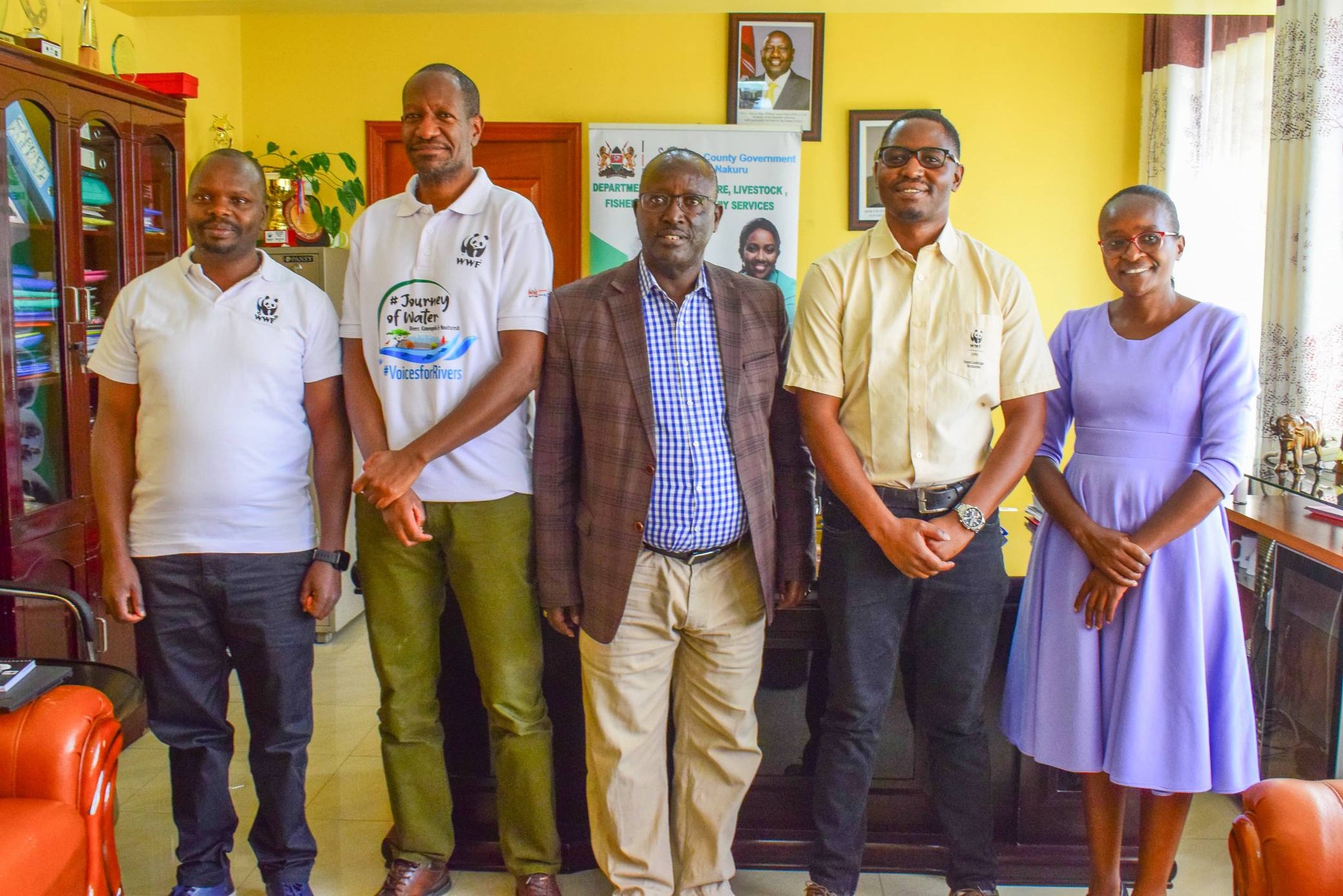
These concerns were highlighted during a courtesy call by a team from the World Wide Fund for Nature (WWF), led by Kenya Rift Lakes Landscape Manager Kevin Gichangi, to the Nakuru County Chief Officer for Livestock, Fisheries and Veterinary Services, Dr Michael Cheruiyot.
The engagement provided an opportunity to discuss ongoing environmental challenges in the basin and explore collaborative approaches to restoring the lake.
During the meeting, Dr Cheruiyot was briefed on the Lake Naivasha Basin Climate & Community Project (LNBCC), a multi-stakeholder initiative designed to address both environmental degradation and community vulnerabilities within the basin.
The Lake Naivasha Basin Climate & Community Project (LNBCC) focuses on restoring degraded forest ecosystems, reducing land degradation, and promoting sustainable land and water use practices across the catchment.
Key interventions under the project include rehabilitating critical catchment areas through tree planting, promoting climate-smart agriculture, conserving riparian zones, and strengthening community participation in natural resource management.
By improving ecosystem health, the project aims to enhance water flow regulation, reduce pollution, and improve the quality of water flowing into the lake critical factors for healthy fish habitats and sustainable fisheries.
Speaking during the engagement, Dr. Cheruiyot emphasized the importance of ecosystem restoration in safeguarding livelihoods that depend on the lake, noting the strong link between environmental health and fisheries productivity.
“The health of Lake Naivasha is directly linked to the sustainability of our fisheries. By restoring the basin and promoting ecosystem-based management, this project will help improve fish stocks, protect breeding areas, and ensure that fishing communities can continue to benefit from the lake for generations to come,” he said.
The partnership between WWF and the County Governments of Nakuru, Nyadarua and Narok is therefore seen as a timely and strategic intervention that aligns with the county’s broader goals on environmental conservation, sustainable fisheries development, and climate resilience.
Beyond conservation, the collaboration is expected to improve food security, strengthen local economies, and enhance the resilience of communities around Lake Naivasha, while ensuring the long-term sustainability of one of Kenya’s most important freshwater ecosystems.